

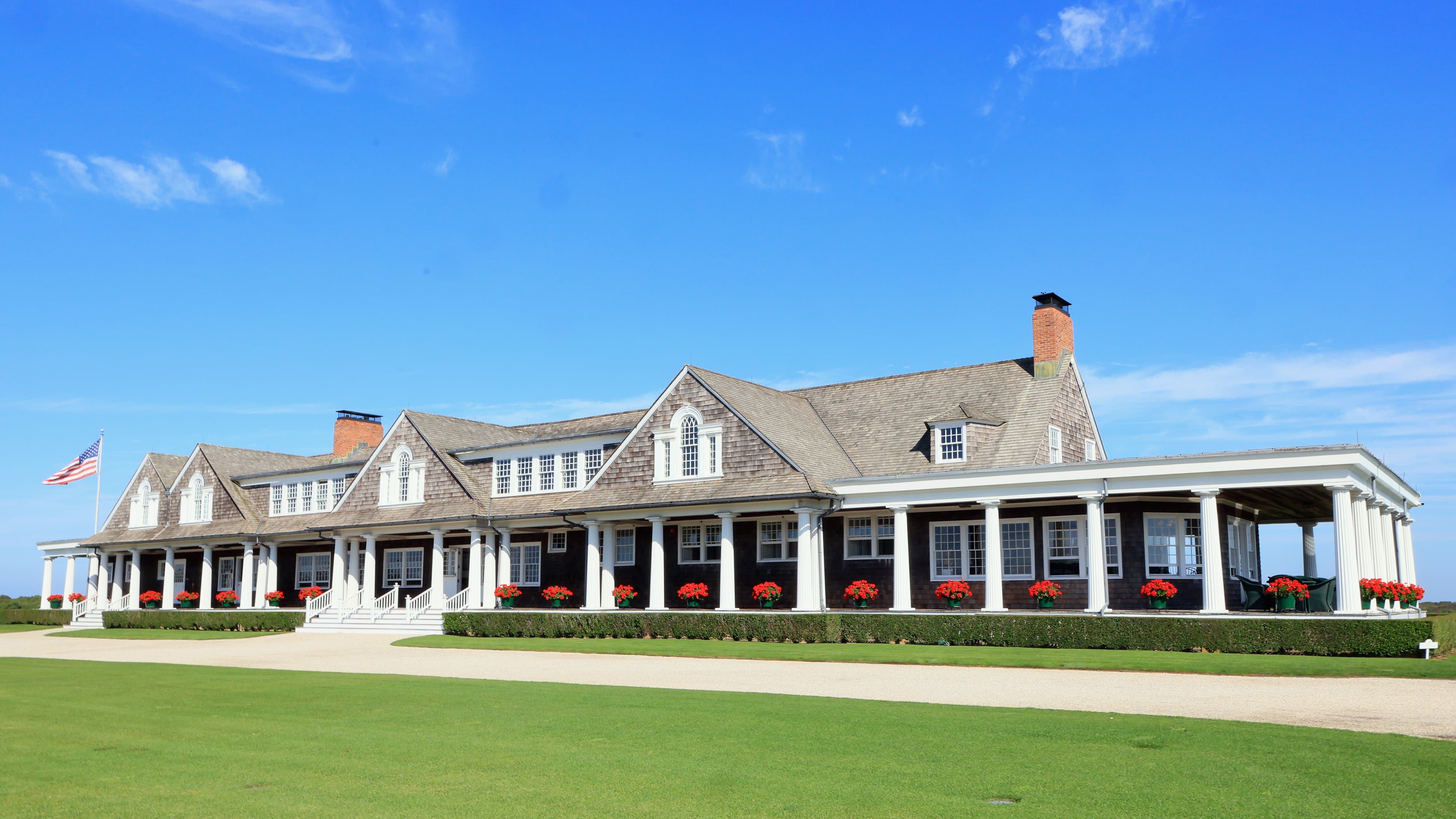
U.S. 오픈이 뉴욕 롱아일랜드 동쪽 끝에 자리한 명문 신네콕 힐스 골프 클럽으로 돌아온다. 6월 18일부터 21일까지 펼쳐질 이 대회는 미국 골프 역사에서 가장 중요한 챔피언십이다.
신네콕 힐스는 유일하게 3세기에 걸쳐 U.S. 오픈을 개최한 코스다. 1896년, 1986년, 1995년, 2004년, 2018년에 이어 이제 2026년이다.
01뉴욕, 스포츠의 축제 주간
올해 뉴욕 메트로폴리탄 지역은 스포츠의 열기로 가득하다. 뉴욕 닉스가 2026 NBA 챔피언십을 축하하는 티켓테이프 퍼레이드가 목요일에 열리고, FIFA 월드컵은 화요일 밤 뉴저지 메도우랜즈의 메트라이프 스타디움에서 프랑스 대 세네갈 경기가 열린다. 양키스는 화이트삭스와 레즈를 상대로 한 주 내내 홈경기를 한다.
롱아일랜드는 특히 골프 열정이 강한 지역이다. 총 165개의 골프 코스가 있으며, 베스페이지 스테이트 파크처럼 대중적인 벤추를 갖춘 코스들도 많다.
이곳은 미국 골프 메이저 챔피언십의 중심지다. 롱아일랜드와 주변 지역에서 11번의 U.S. 오픈이 개최되었다 (신네콕 힐스 5회, 가든 시티 1902년, 인우드 1923년, 프레시 메도우 1932년, 베스페이지 블랙 2002년, 2009년). 또한 6번의 PGA 챔피언십이 열렸고, 2025년 라이더컵도 베스페이지 블랙에서 개최되었다.
02건축 유산의 보물창고
신네콕 힐스 주변의 건축 유산은 박물관 수준이다. 가든 시티 골프 클럽(Devereux Emmet, Walter Travis), 그리고 신네콕과 이웃한 내셔널 골프 링크스(Charles Blair Macdonald), 세보낙 골프 클럽(Jack Nicklaus, Tom Doak), 사우스햄튼 골프 클럽(Seth Raynor) 등이다.
사실 만약 거대한 자선 골프 이벤트를 상상한다면, 신네콕의 11-18, 1-2번 홀 → 내셔널의 10-18, 1-3번 → 세보낙의 8-18, 1-7번 → 내셔널의 4-9번 → 신네콕의 3-10번 → 사우스햄튼의 6-18번을 계속 플레이하는 72홀 릴레이 대회를 만들 수 있다. 건축적으로 중요한 18홀의 뛰어난 라운드를 신발을 벗지 않고도 즐길 수 있는 것이다. 롱아일랜드만이 가능하다.
03신네콕 힐스의 변천
이곳의 골프 역사는 1892년 시작된다. 원래 12홀 코스는 윌리 데이비스가 설계했으며 4,423야드였다. 1896년 두 번째 U.S. 오픈이 이 거리로 개최되었다. 1915년부터 1916년 사이 코스는 찰스 블레어 맥도날드가 완전히 재설계했고, 마을의 전직 토목 기사였던 (골프를 하지 않던) 세스 래이너가 그의 옆에서 일했다. 둘의 협력은 시카고 골프 클럽과 예일 대학 골프 코스 같은 뛰어난 레이아웃들로 결실을 맺었고, 오늘날 그들의 이름은 근처 사우스햄튼 묘지에 함께 안장된 비석으로 기념된다.
현재의 코스 레이아웃과 특징은 1930년부터 1931년 윌리엄 플린에 의한 대규모 리빌드의 산물이다. 흥미롭게도 클럽은 그를 비공식적으로 자문 건축가라고 부르는데, 그는 1945년에 이미 돌아가셨다. 수십 년의 집약적인 나무 식재 후, 클럽은 플린이 구상한 개방적이고 바람이 부는 모래언덕 같은 경관을 되찾기 위해 노력했다.
04거대함의 철학
신네콕 힐스의 모든 것은 광대하다. 전체 부지 300에이커, 페어웨이 42에이커, 번커 8에이커, 러프 100에이커. 평균 그린 크기는 7,400평방피트다. 지난 25년간의 광범위한 나무 제거는 전체 부지와 해안선까지 내다보는 놀라운 장거리 뷰를 노출시켰다.
현대 코스 복원 운동의 전체 흐름은 1986년 U.S. 오픈을 여기서 개최하기로 한 USGA의 결정에서 비롯되었다. 그 이후 신네콕은 창립 비전을 구현해왔다 – 중간(티에서 페어웨이를 거쳐 그린까지)은 빠르고 단단하며 일관성 있게, 주변부는 페스큐와 리틀 블루스템 같은 자연스러운 다중 텍스처 식생이 번성하도록 한다. 그 결과는 강력한 대조다: 견고하고 빠른 일관성 있는 플레이 표면 중앙이 거칠고 투박한 해안 풍경과 마주하는 구조다.
이 해변 입지의 천재성은 1892년 뉴욕의 명문 건축사무소 맥킴, 미드 & 화이트의 스탠포드 화이트가 설계한 아이코닉한 싱글 스타일 클럽하우스로 더욱 강조된다. 수십 년 후 옆으로 확장되었지만, 미국 최초의 목적 건축 골프 클럽하우스는 오늘날까지도 에어컨이 없다. 골프 코스를 내려다보는 언덕 위의 위치와 남쪽의 대서양, 북쪽의 피코닉 베이에서 항상 부는 해풍이 필요한 모든 환기를 제공한다.
051986년: 극한의 도전
자연 골프 조건의 힘을 잘 보여주는 순간은 1986년 U.S. 오픈 첫 라운드다. 노리스터(Nor'easter) 폭풍이 코스를 휩쓸었고 바람이 시속 40마일에 육박하며 강한 비가 내렸다. 평균 스코어는 75.3이었고 거의 3분의 1의 선수들이 80대를 기록했다. 잭 니클라우스는 10번 홀 첫 티 샷을 잃었고, 단 한 명의 선수 – 밥 트웨이만이 라운드에서 파를 기록했다. 일요일이 되자 날씨가 진정되고 경쟁은 가열되어 한 때 9명의 선수가 동점 리드를 했다. 결국 레이몬드 플로이드가 4언더 66으로 경쟁을 뚫었고, 43세 284일의 나이로 미국 챔피언십 최고령 우승자가 되었다.
061995년: 타이거와 페이빈의 드라마
1995년 U.S. 오픈은 신인 아마추어 타이거 우즈가 첫 U.S. 오픈에 출전했던 무대다. 하지만 그는 신네콕 힐스의 악명 높은 빽빽한 러프에서 금요일 중반 손목 부상으로 기권했다.
일요일 우승은 코리 페이빈에게 돌아갔다. 그는 그 주 드라이빙 거리 2번째로 짧은 선수였지만 그렉 노먼을 2타로 누르고 우승했다. 결정적인 순간은 U.S. 오픈 역사상 가장 기억에 남는 샷 중 하나다. 18번 홀(450야드 파4) 오른쪽 페어웨이에서 돕는 우-좌 바람 속에 228야드 4우드를 홀 5피트 범위까지 날렸다. NBC 해설자 조니 밀러는 당시 "그의 인생 최고의 샷"이라고 불렀고, 페이빈은 버디 퍼트를 놓쳤지만 파로 우승을 확정했다.
072004년: 극도의 건조함
2004년 U.S. 오픈의 주말은 극한의 건조함으로 변했다. USGA 셋업팀과 신네콕 힐스 관리팀의 소통 부재로 코스가 극도로 경화되어 일요일 아침 플레이가 임시 중단되어야 했다. 파3 7번 홀 그린에서 공들이 물을 더 줄 때까지 멈추지 않았다.
남아프리카의 레티프 구센이 역사적인 퍼팅 디스플레이를 펼쳤다. 최종 라운드에서 11번 원퍼팅을 기록했고 마지막 6그린 중 5그린을 원퍼팅으로 71을 기록했다 – 평균 스코어가 78.7이던 날씨다. 필 미켈슨을 포함한 경쟁자들이 극한의 조건에 무너졌다. 미켈슨은 파3 17번에서 5피트 거리에서 3퍼팅을 했고 2타 차로 떨어졌다. U.S. 오픈에서 2위로 6번 떨어진 미켈슨에게 이는 골프 그랜드 슬램의 꿈을 날려버린 대회였다. 2004년의 셋업 혼선을 계기로 USGA는 골프 코스 관리 접근 방식을 완전히 개선했다.
082018년: 코엡카의 연속 우승
2018년 U.S. 오픈은 디펜딩 챔피언 브룩스 코엡카가 연속으로 우승했다. 벤 호건(1950-51)과 커티스 스트레인지(1988-89) 이후 두 번째 연속 우승 선수가 되었다. 최종 라운드 68은 1오버 281 스코어로 잉글랜드의 톰 플릿우드를 1타로 누르기에 충분했다. 플릿우드는 최종 라운드 63으로 선선한 바람과 유리한 홀 로케이션의 이점을 누렸다. 리키 파울러는 주말에 84에서 65로 상승했다. 평균 코스 스코어는 75.3에서 72.2로 떨어졌다. 코엡카는 그 이후 맹렬한 메이저 스트릭을 기록했고, 연속 U.S. 오픈 우승에 이어 2018-19 PGA 챔피언십을 연속으로 우승했다.
092026 코스 셋업
신네콕 힐스는 파70으로 7,440야드까지 늘어났다. 2018년과 같은 거리지만, 그 사이 PGA 투어 평균 드라이빙 거리는 2.6% 증가했다. 2017-2018년엔 296.1야드였고, 현재는 303.9야드다. 드라이브와 어프로치를 합치면 신네콕 힐스는 이번에 약 193야드 짧아진다 – 소폭이지만 영향은 있다.
큰 변화는 페어웨이 모우잉 라인을 2018년 이후 번커에 더 가깝게 조정했다는 것이다. 번커를 더 플레이에 들어오게 하고 땅의 게임을 더 동적이고 흥미롭게 만든다. 2018년엔 클럽이 U.S. 오픈 준비로 페어웨이를 좁혔다. 이번엔 다르다. 베테랑 관리자 조나단 제닝스(CGCS)의 지시 아래 계획은 신네콕이 신네콕답게 플레이하게 하는 것이다.
10주목할 홀들
리 트레비노는 11번 홀을 "골프에서 가장 짧은 파5"라고 불렀다. 신네콕 힐스의 가장 짧은 홀이며 가장 작은 그린이다 – 단 4,280평방피트로, 평균 그린의 약 60% 크기다. 가장 포착하기 어려운 홀이기도 하다. 티에서 그린까지 17피트 높이 차이가 있고 볼록한 컨투어가 어프로치 샷을 격퇴하는 형태다. 4개의 가파른 번커가 앞을 보호하고, 왼쪽과 뒤쪽 페어웨이 베일아웃이 있지만 그 복구는 위로 오르내려야 하고 컨트롤하기 어렵다. 그린 표면은 전체 골프 코스의 최고 지점 – 해수면으로부터 72피트 높이다. 따라서 코스에서 가장 바람에 노출된 위치다. 이곳의 바람은 거의 항상 있고, 보통 왼쪽 어깨 뒤로 다운윈드지만 가끔 선수 얼굴에 정면으로 분다. "Hill Head"를 다루는 것은 기술보다는 신경을 관리하는 문제다.
9번 홀은 2026 U.S. 오픈에서 par에 대한 가장 긴 홀이며 2018년 U.S. 오픈에서 가장 어려웠던 홀이다 – 평균 스코어 4.74로 파보다 약 0.75 샷이 높다. 이는 티 샷이 페어웨이 랜딩 지역으로 약 40피트 하강하고 우세한 남서풍으로 선수 등 뒤에서 바람이 불어주는 데도 그렇다. 문제는 오른쪽에서 왼쪽으로 떨어지는 역경사 페어웨이인데, 홀은 약간 왼쪽에서 오른쪽으로 휜다. 오른쪽 안팎 번커 위 284야드 캐리가 필요하지만, 이는 325야드 더 안쪽 왼쪽에 더 깊은 번커를 가져온다. 하이 컷이 아니면 뭐든 그 두 번째 해저드로 자석처럼 끌려간다. 그곳에서 약 200야드 어프로치 샷은 왼쪽-오른쪽 앞 번커를 넘어 코스의 더 단순한 그린 중 하나다. 티에서 페어웨이를 놓치면 보기(이상)은 가능성이 높다. 이것은 드라이빙 거리가 거의 책임이 되는 홀이고, 특히 볼을 플레이 중에 유지하는 숏게임 컨트롤이 없으면 더욱 그렇다.
18번 홀은 3샷 풀홀이다. 티에서 그린까지 20개의 번커가 있는데, 절반은 그린에, 절반은 티 샷과 두 번째 샷 랜딩 존에 전략적으로 분포한다. 이는 선수들을 끝까지 긴장하게 유지한다. 레이몬드 플로이드는 1986년 우승을 여기서 중요한 버디로 봉인했다. 톰 레흐만은 1995년 챔피언십 중 치명적인 더블 보기를 했고, 그렉 노먼은 코리 페이빈을 따라잡는 데 필요한 버디를 놓쳤다. 이는 그 드문 파5로, 두 번째 샷이 중요하고 플레이어들이 짧은-아이언 어프로치 샷에 땀을 흘린다.
11Original (English) — PGA TOUR
The U.S. Open returns to historic Shinnecock Hills Golf Club on the far eastern end of Long Island, New York, June 18-21.
The course is the only venue to hold U.S. Opens in three centuries (1896, 1986, 1995, 2004, 2018 and now 2026).
Here's what to know about the historic host site and info on what players will face this week as it hosts another major championship.
It's going to be a sport-crazed week for the whole of the New York metropolitan area, with golf's national championship part of an unprecedented series of events. With New York a basketball-crazed town, the New York Knicks will celebrate their 2026 NBA Championship with a ticker-tape parade on Thursday. FIFA's quadrennial World Cup is also in town Tuesday night, with France vs. Senegal at MetLife Stadium in the Meadowlands. And don't forget New York Yankees home games the whole week against the White Sox and Reds. From one end of Long Island to the other across the 110-mile-wide region.
Long Island is also golf-crazy, thanks to 165 courses, including such wildly public venues as the five-course Bethpage State Park. This will be the 11th U.S. Open, following past championships at Shinnecock Hills (1896, 1986, 1995, 2004, 2018), Garden City Golf Club (1902), Inwood (1923), Fresh Meadow Country Club (1932) and Bethpage Black (2002, 2009). Toss in six PGA Championships at Engineers (1919), Inwood (1921), Salisbury (1926), Fresh Meadow Country Club (1930), Pomonok Country Club (1939) and Bethpage Black (2019), as well as the 2025 Ryder Cup (Bethpage Black), and you have an incredible history of majors.
Plus, there's the museum-quality architectural heritage of the region that includes Garden City Golf Club (Devereux Emmet and Walter Travis) as well as Shinnecock's immediately adjoining neighbors, National Golf Links of America (Charles Blair Macdonald), Sebonack Golf Club (Jack Nicklaus and Tom Doak) and Southampton Golf Club (Seth Raynor).
In fact, if you wanted to conduct arguably the most lucrative golf charity in history, just schedule a 72-hole, one-day event with relay teams that would proceed seamlessly to play Southampton holes 1-5, jump the hedge to play Shinnecock 11-18, 1-2, climb through another hedgerow to play National Golf Links 10-18, 1-3, then next door to play Sebonack 8-18, then 1-7, back over to National for holes 4-9, over to Shinnecock for 3-10, and then back across to finish up on Southampton again, 6-18. That would be a day of architecturally significant golf without taking off your golf shoes. Only on Long Island
Golf started here in 1892, with the original 12-hole course designed by Willie Davis and measuring 4,423 yards long, which is the length it played at the second U.S. Open, held here in 1896. The course was completely redesigned in 1915-1916 by Charles Blair Macdonald, with the town's former civil engineer, a non-golfer named Seth Raynor, working at his side. Their design partnership quickly blossomed, and today it is memorialized not only with a string of epic layouts like Chicago Golf Club and Yale University Golf Course, but also with their adjoining tombstones at nearby Southampton Cemetery, just down the road from Shinnecock Hills Golf Club.
The present routing and character of the heathland layout is the product of a massive rebuild in 1930-31 by William S. Flynn. Interestingly, the club refers to him, informally, as their consulting architect, though he passed away in 1945. After years of intensive tree planting and growth, the club has driven to recapture the open, windswept character of that dunes-like creation. cape that Flynn envisioned.
Everything about Shinnecock Hills is expansive: 300 acres to the entire property. 42 acres of fairway. 8 acres of bunkering. 100 acres of native rough. Greens that average 7,400 square feet. Extensive tree removal over the last 25 years has exposed incredible long views across the whole site and out onto the coastline.
The whole modern movement towards restoration in course design can be said to date to the USGA's decision to hold the 1986 U.S. Open here. Since then, the course has progressed steadily to embody its founding vision as a rough-hewn, scruffy environment that combines the latest in agronomic technique and sophistication down the middle (from tee to fairway to green) while allowing a naturally sustainable, multi-textured plant mix of fescues and little bluestem to flourish in the peripheral areas. The result is a powerful juxtaposition of a firm, fast and consistent playing central surface amidst the rough and tumble of a rugged coastal envelope.
The genius of the seaside setting is enhanced by an iconic Shingle-style clubhouse created by Stanford White of the landmark New York design firm, McKim, Mead & White, in 1892. Though much expanded laterally within a few years, the country's first purpose-built golf clubhouse remains without air conditioning even today. Its location atop a hill overlooking the golf course and exposed to ever-present breezes from the Atlantic Ocean to the south and Peconic Bay to the north provides all the ventilation needed.
There's no better reminder of the power of natural golf conditions than the opening round of the 1986 U.S. Open, when a Nor'easter blew across the property, with winds approaching 40 mph and occasionally intense rain, producing an average score of 75.3 and almost a third of the field shot in the 80s. Jack Nicklaus lost his opening tee shot on the 10th hole, and only one player – Bob Tway – matched par for the round. By Sunday, the weather calmed and the competition heated up, with nine players at one point tied for the lead until Raymond Floyd broke through the logjam with a 4-under par 66 to become (at an age of 43 years and 284 days) the oldest winner of the national championship.
The 1995 U.S. Open saw young amateur phenom Tiger Woods compete in his first U.S. Open, though he was forced to withdraw mid-round Friday with a wrist injury from Shinnecock Hills' notoriously dense rough. On Sunday, Corey Pavin, the second shortest driver of the ball all week, emerged with a two-stroke victory over Greg Norman. The decisive blow was one of the most memorable shots in U.S. Open history, a 228-yard 4-wood in a helping, right-to-left wind from the right fairway on the 450-yard 18th hole to within 5 feet of the hole. NBC commentator Johnny Miller famously called it at the time "the shot of his life," and though Pavin missed the birdie putt, the par was enough to secure a very emotional win.
Course conditions turned brutally dry on the weekend of the 2004 U.S. Open. Miscommunication between the USGA setup team and the maintenance crew at Shinnecock Hills led to such a severe firming up of the course that play was temporarily suspended Sunday morning because balls would not stop rolling on the green of the par-3 seventh hole until extra water was applied. South Africa's Retief Goosen put on the putting display of a lifetime, one-putting eleven times during his final round, including five of the last six greens, to shoot a 71 on a day when the average score was 78.7. Among those succumbing to the tough conditions was contender Phil Mickelson, who three-putted the par-3 17th hole from five feet and lost by two shots. It was his third time finishing second in a U.S. Open; he would go on to finish second (or tied) a total of six times, thus falling short by this one championship of claiming the Grand Slam of golf. Meanwhile, as a result of the 2004 setup confusion, the USGA completely altered its approach towards golf course management and took closer control of managing course preparation going forward.
The 2018 U.S. Open saw defending champion Brooks Koepka triumph for the second time running, matching previous back-to-back winners Ben Hogan (1950-51) and Curtis Strange (1988-89). His final round 68 was good enough for a 1-over par 281 total and a one-shot victory over fast-charging Englishman Tommy Fleetwood, whose final round 63 capped off a day of favorable scoring thanks to uncommonly modest winds and more favorable hole locations. Rickie Fowler went from 84 to 65 on the weekend. Average course score dropped from 75.3 to 72.2. Koepka, as it turns out, was in the midst of a furious major streak that followed consecutive U.S Open wins with back-to-back wins in the PGA Championship, 2018-19.
Shinnecock Hills, a par 70, is stretched to the limit of its distance at 7,440. That's the same distance it played in 2018, though average driving distance on the PGA TOUR has increased over that time by 2.6%. In 2017-2018, it was 296.1 yards; year-to-date now it's up to 303.9 yards. If you include drives and approach shots, Shinnecock Hills this time around will play about 193 yards shorter – marginal, but nonetheless consequential.
One big difference is that the fairway mowing lines have been altered slightly from 2018 to extend closer to the bunkers, bringing them more into play and thus effectively making the ground game roll out for tee shots and approaches more dynamic and more compelling. Back then, in 2018, the club had narrowed the fairways in the run-up to the U.S. Open. Not this time. Under the direction of veteran superintendent Jonathan Jennings, CGCS, the plan is to let Shinnecock play like Shinnecock.
Lee Trevino called the 11th hole "the shortest par 5 in golf." It's certainly the shortest hole at Shinnecock Hills and also has the smallest green, only 4,280 square feet. That's about 60% of an average green out there; it's also the most elusive thanks to a 17-foot climb from tee to green and the kind of convex contour that seemingly repels an approach shot upon landing. Four steep bunkers protect the front, and while there's a fairway bailout long and left, it leaves the kind of recovery that's up and over and very hard to control. The putting surface occupies the high point on the entire golf course – 72 feet above sea level. It is thus the course setting most exposed to wind, which out here is almost always present, often downwind over the left shoulder, but occasionally straight into the player's face. Handling "Hill Head" is more a matter of managing nerves than of making a technically competent swing.
This is the longest hole in relation to par at the 2026 U.S. Open and the hole that played hardest during the 2018 U.S. Open, with an average score of 4.74, basically three-quarters of a shot over par. This despite it playing downhill on the tee shot some 40 feet to the fairway landing area and generally downwind with the prevailing southwesterly breeze at the player's back. The problem is a reverse-camber fairway that falls from right to left while the hole bends slightly left to right. It's a 284-yard carry over an inside right fairway bunker, but that just brings into play another one deeper left that's 325 yards to reach. Anything but a high cut tends to be drawn magnetically into that second hazard. From there, the approach shot, circa 200 yards, is slightly uphill over front bunkers left and right to one of the simpler greens on the course. Miss the fairway off the tee and bogey (or worse) is a likely outcome. This will be a hole to watch where distance off the tee is almost a liability, certainly without the kind of shot-making control that keeps the ball in play.
A full three-shot hole, thanks to length into a prevailing wind. Twenty bunkers dot the way from tee to green, half of them at the putting surface, the other half scattered strategically on offset angles at the tee shot and second shot landing zones. That keeps players on their toes the entire way. Raymond Floyd sealed his 1986 win here with a crucial birdie in 1986. Tom Lehman made a costly double-bogey during the 1995 championship that damaged his chances, while Greg Norman failed to make the birdie he needed to catch Corey Pavin. It's that rare par-5 where second shots matter and player sweat out their short-iron approach shot.