
9월 22~27일 메디나 컨트리클럽에서 열릴 2026 프레지던츠컵의 24명 로스터가 확정됐다. 화요일 밤 라이브 셀렉션 쇼에서 각 캡틴이 최종 6명의 와일드카드를 공개한 것이다. 많은 픽은 예상된 것이지만, 양팀 모두 로스터 후반부에서 예상을 벗어난 선택을 하며 향후 논쟁을 예고했다.
01미국팀의 최대 서프라이즈: 21세 신성 코이반 선택
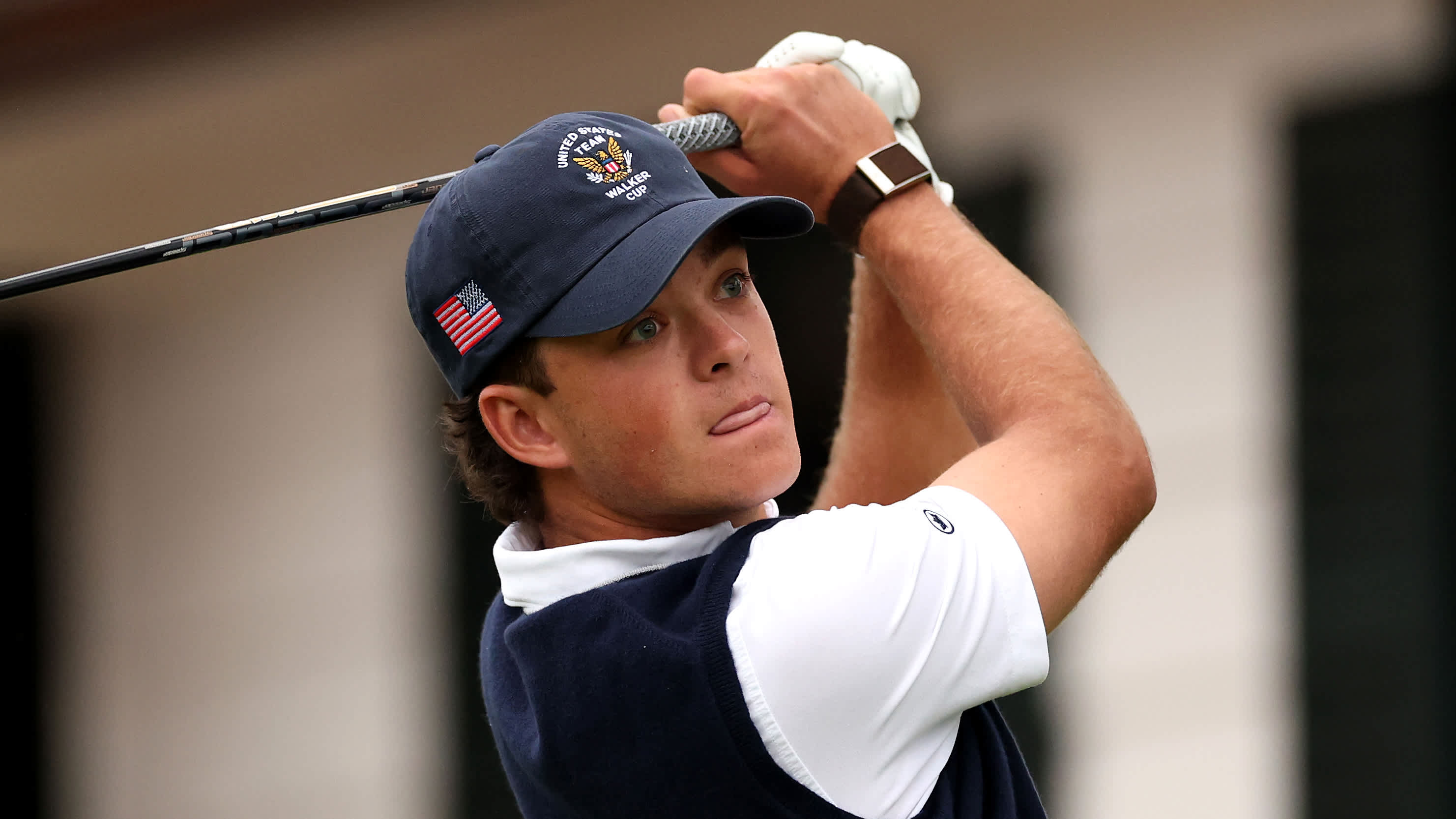
미국팀의 최고 이슈는 프로 전환 몇 개월 만에 21세 피텀 코이반을 픽한 것이다. 이는 관례를 깬다. 미국팀은 전통적으로 점수 리스트와 베테랑에 의존해왔고, 지난 2년간의 성적을 바탕으로 가장 합당한 선수를 고르는 방식을 고수했다. 그리고 그것이 먹혀 왔다. 미국팀은 1998년 이후 프레지던츠컵을 잃지 않았다.
통상 루키는 자동 선발로 참여하거나, J.J. 스팬의 경우처럼 명확한 상위 12 자격이 있을 때 캡틴 픽이 나온다. 카메론 영이 그 예였다. 하지만 코이반은 그 경계에 있다. 이미 상위 12 미국인에 해당할 수도, 아닐 수도 있다.
코이반 선택의 의미는 미래다. 홈 프레지던츠컵에서 경험을 쌓은 루키는 향후 2년간의 애웨이 라이더컵과 프레지던츠컵에서 큰 자산이 될 것이다. 유럽팀이 2023 라이더컵에서 루드빅 오베리를 프로 데뷔 수개월 후 선발한 것과 같은 논리다.
02포인트 리스트 상위권의 뜻밖의 제외
올해 캡틴 픽은 포인트 리스트 상위 12와 완전히 일치하지 않았다. 미국팀의 벤 그리핀은 8위였음에도 불구하고 제외됐다. 그는 2025 브레이크스루 시즌(3승)에 많은 포인트를 모았지만, 최근 수개월간 부진해 탈락했다. J.J. 스팬은 10위였으나 투어챔피언십 1라운드 기권으로 선발성이 의문시됐다.
미국팀의 다른 미픽 선수들도 있다. 라이언 제라드(16위)는 여전히 선발 고려 대상이었으나 탈락했다. 악샤이 바티아(14위)와 매버릭 맥닐리(15위)도 선발 예상이 있었으나 떨어졌다. 이들은 이번 결정에 실망했을 것으로 보인다.
03국제팀의 베주이덴하우트: 경험에 거는 도박
국제팀의 최대 서프라이즈는 오길비의 베주이덴하우트 선택이다. 그는 포인트 리스트 18위(테일러 펜드리스 바로 아래)로 상위권 밖이다. 올해도 저조한 시즌을 보내고 있으며, 페덱스컵 랭킹도 97위로 투어 상태 유지만 해도 다행이다.
하지만 베주이덴하우트는 프레지던츠컵 경험 2회에서 3-1-1의 우수한 전적을 기록했다. 2022 퀘일 홀로우 애웨이 프레지던츠컵에서도 1-0-1을 기록했다. 오길비는 홈그라운드 시카고에서의 어려운 환경을 고려해 베테랑 경험을 우선시한 것으로 보인다.
객관적 통계도 베주이덴하우트를 일부 지지한다. 투어 전체 스트로크 게인드 25위, 퍼팅 14위, 어프로치 26위를 기록했다. 다만 상위 성적으로는 이어지지 못했다. 21경기 중 톱10은 2회뿐이고 모두 애디셔널 이벤트였다.
04페어링 전략의 갈림길: 김시우-톰 킴과 마츠야마-히사츠네
국제팀 톱2로 꼽히는 김시우와 톰 킴을 함께 페어링할지 분리할지는 전략 과제다. 지난 2회 프레지던츠컵에서 이 둘은 2-1-0의 좋은 팀 전적을 보였다. 하지만 메가스타 페어링이 항상 효과적인 것은 아니다. 애덤 스콧과 마츠야마는 국제팀에서 가장 많은 경기를 함께했지만 2-4-1에 그쳤다. 어니 엘스와 비제이 싱도 2-4-0이었다.
최강을 한 곳에 집중할지, 흩어서 최대한의 포인트를 노릴지는 어려운 선택이다. 애웨이 경기에서 약세인 국제팀이 고민해야 할 지점이다.
또 다른 주목할 페어링은 마츠야마와 히사츠네의 첫 일본 쌍이다. 마츠야마는 6회의 프레지던츠컵에 참가했지만 일본인 팀원을 본 적이 없다. 이번이 처음이다. 국제팀은 한국인, 호주인, 캐나다인 등 동국인 페어링을 자주 써왔다.
마츠야마는 싱글스에서 3-1-2의 좋은 성적을 거뒀으나, 포섬과 포볼에서는 6-12-3이다. C.T. 판과 상문배와만 승리 기록이 있다. 히사츠네는 좋은 스트라이커(드라이버, 어프로치 상위)지만 숏게임이 약하다. 마츠야마의 숏게임 능력이 이를 보완할 수 있다. 다만 둘 다 퍼팅이 평균 이하라는 약점이 있다. 오길비가 이 조합을 시험해볼 가능성이 높다.
05Original (English) — PGA TOUR
Did Brandt Snedeker and Geoff Ogilvy get it right?
We now know the full rosters for the U.S. and International Presidents Cup teams, with the final six players of each team revealed by the respective captains on Tuesday night during a live selection show.
Many of the picks were expected, though both teams deviated from popular opinion at the back end of the rosters, which will surely inspire debate in the lead-up to the event.
Let's break down those surprise picks and other lingering questions we have now that the 24 golfers are finalized. The Presidents Cup will be held from Sept. 22-27 at Medinah Country Club, Course No. 3.
The surprise of the selections was the U.S. Team picking Koivun, the 21-year-old phenom just months removed from turning pro.
Why is it a shock? It breaks patterns. With an incredibly deep pool of talent, the Americans have typically relied heavily on their points list and veterans to fill out their roster, working with the mantra to give it to whoever they deem the most deserving based on their play over the last two years, rather than thinking for the future or weighing potential. And it has worked. The U.S. Team hasn't lost the Presidents Cup since 1998 and has dominated the Internationals.
Often, rookies come through automatic qualifiers, like J.J. Spaun at last year's Ryder Cup. If they are captains' picks, it's because they are overwhelmingly one of the top 12 Americans, like Cameron Young a year ago.
That's not necessarily the case for Koivun. There's an argument to be made that he's already one of the top 12 Americans, yet even if he isn't, his inclusion makes loads of sense. At minimum, he should provide a strong level of play close to the other alternatives (Ryan Gerard, Spaun, etc.), and it also sets future U.S. teams up for success.
Getting Koivun reps at a home Presidents Cup early in his development will pay dividends when the U.S. heads on the road the next two years for away Ryder Cups and Presidents Cups. Think of it like how the European Ryder Cup team selected Ludvig Åberg for the 2023 Ryder Cup just months after his pro debut.
Now the question becomes: How much will Koivun play and in what formats?
Only one U.S. player in the history of the Presidents Cup has played fewer than three matches (Bryson DeChambeau, 2019), so expect Koivun to play at least three times. Four-ball would make the most sense, allowing the youngster to play his own ball and get comfortable. That's the format to make birdies, and Koivun showed the ability to do that in his brief stint on Tour this season, making four per round (ranked 35th on Tour).
Some years, the captain's picks are a mirror image of the top 12 on the points list. That was not the case this year, as several players inside the top 12 of both teams were left off.
Ben Griffin finished eighth in the points list but was not chosen. He earned most of his points during a breakthrough 2025 season, winning three times, and had struggled in recent months, leading to his omission.
J.J. Spaun was 10th on the points list, though his availability became uncertain after withdrawing during the first round of the TOUR Championship. Similar concerns arose about Jason Day on the International side. His year ended unceremoniously with multiple missed cuts and withdrawals due to injury.
The only other top-12 finisher who didn't get selected was South African Casey Jarvis, who played well on the DP World Tour this season. His omission wasn't a surprise given his lack of Tour starts. Aldrich Potgieter seemed likely to be part of this team after winning Rookie of the Year last fall, but his form had also fallen off in recent months.
On the U.S. side, Ryan Gerard looked to be in consideration for a pick. Gerard even said on Sunday of the TOUR Championship that he was going to play in Europe because he wanted to be in form in case he was selected. Gerard was ultimately left off. He was 16th on the points list. Others who will be disappointed that they weren't picked include Akshay Bhatia (14th on the points list) and Maverick McNealy (15th).
Nearly as surprising as Koivun on the American side, Ogilvy delivered a shocker with his selection of Bezuidenhout to round out the International roster.
Bezuidenhout has a proven track record in this event, compiling a 3-1-1 record in two appearances, but he was well outside the top 12 on the team's points list and is having a down season.
Whereas he compiled strong seasons in 2024 and 2022, finishing 29th and 51st in the FedExCup, respectively, Bezuidenhout is currently 97th and will spend the fall just trying to maintain Tour status. He ranked 18th on the Internationals' points list, a spot below Taylor Pendrith, who was chosen as a captain's assistant.
Ogilvy is clearly relying on Bezuidenhout's resume in this event, leaning on experienced players who know what to expect. That's a sound strategy as the Internationals head into a hostile environment in Chicago. It won't be his first time playing an away Presidents Cup. He went 1-0-1 at Quail Hollow in 2022.
There are some underlying metrics to support Bezuidenhout's case as well. He ranks 25th on Tour in Strokes Gained: Total and has great years putting (14th on Tour) and with his approach play (26th on Tour). That said, those numbers didn't yield top results. Bezuidenhout had two top-10 finishes in 21 starts, and both came at Additional Events.
The two developed into a dynamic pairing over the last two Presidents Cups, 2-1-0 together, and delivered the highlight moment of the Internationals' ultimately unsuccessful push at Royal Montreal Golf Club. They are also two of the International Team's building blocks. It seems natural that they would play together again.
But should they?
It's conceivable that the International Team's top two players by Medinah are Si Woo Kim and Tom Kim. Is it smart to pair them or separate them?
It's a question often pondered at team events, and the International Team has employed the mega-star strategy before. No two players have played more matches together for the International side than Adam Scott and Hideki Matsuyama. For many of those years, they were the two best players, and the captains chose to pair them, hoping to create a vaunted duo. Instead, the two went 2-4-1. Ernie Els and Vijay Singh were frequent partners. They went 2-4-0 together.
As the Internationals face an uphill climb on away turf against a more proven U.S. side, is it best to try and shore up one match? Or hope to spread their best players throughout the lineup card to grab as many points as possible?
Hideki Matsuyama has played six Presidents Cups. He has never had a Japanese teammate.
That changes this year. Ryo Hisatsune was part of Ogilvy's captain's picks. Is it too reductive to expect them to play together?
The Internationals have frequently paired countrymen together. There's typically at least one South Korean duo in every session, and the team has recently sent out numerous All-Australian and All-Canadian groups.
Could we finally get an all-Japanese group? Hideki Matsuyama has been a mainstay on the International side, and while he performs well in Singles (3-1-2 in his career), his combined record in Four-ball and Foursomes is 6-12-3. He holds winning records with only C.T. Pan and Sangmoon Bae.
How to unlock Matsuyama has become a frequent topic of discussion, but this is a lever that the Internationals have never pulled before. So it stands to reason that Ogilvy will pair Hisatsune and Matsuyama at some point to see if it can work.
Hisatsune is a strong ball-striker, ranking above average off the tee and in approach. He struggles mightily around the greens, which Matsuyama's short-game prowess could offset. Putting is a shared weakness, though. Both are below average on the greens.